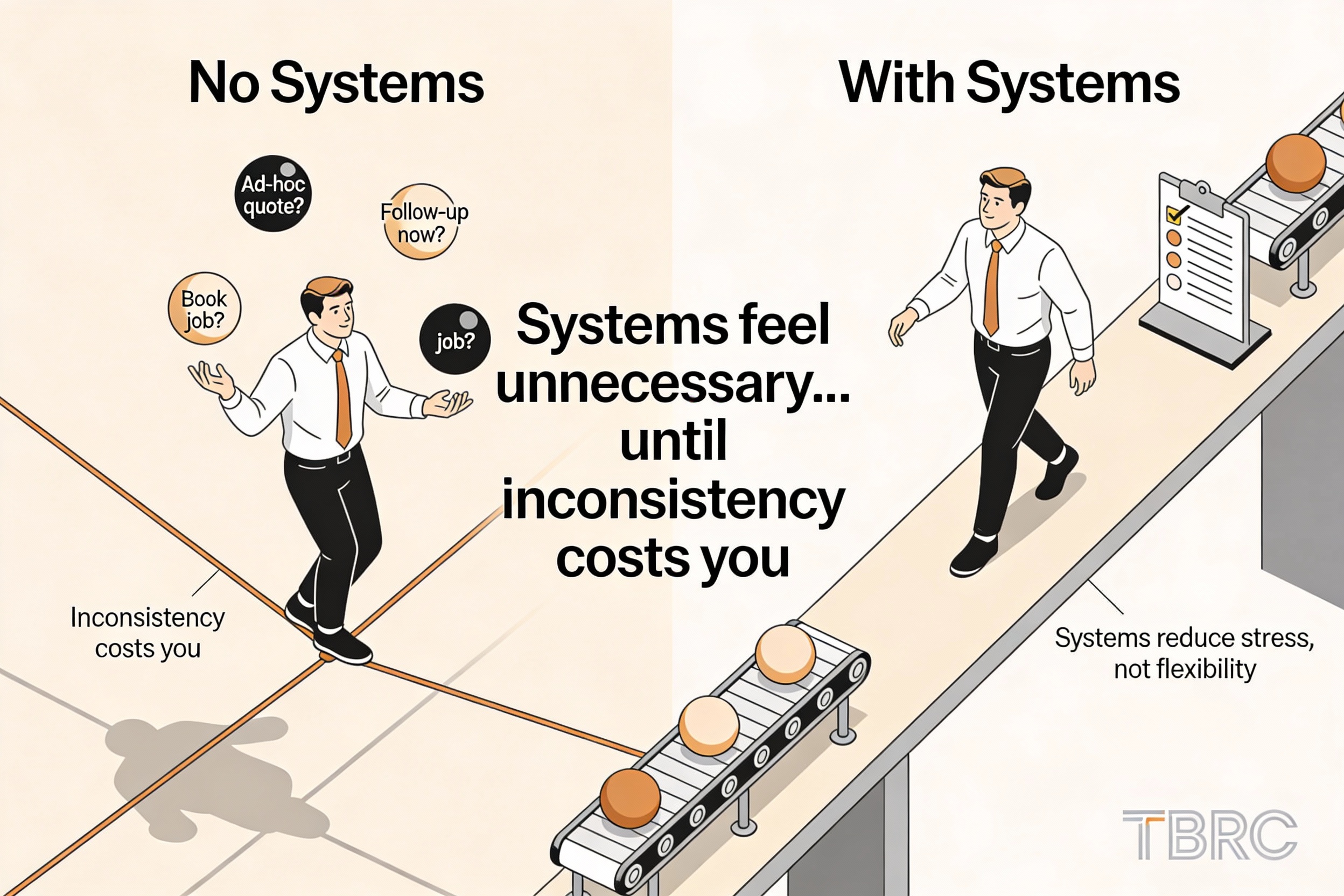
Why Business Systems Feel Like Overkill (Until You Need Them)
Why Systems Feel Like Overkill (Until You Need Them)

Most business owners don’t reject systems because they dislike structure.
They reject them because systems sound like:
Bureaucracy
Complexity
Red tape
Something meant for “bigger businesses”
So they say things like:
“We’re not there yet.”
“That feels overkill.”
“We just need to stay flexible.”
And for a while, that works.
Until it doesn’t.
Why Systems Feel Unnecessary at the Start
In the early stages of a business, progress comes from energy.
You remember things.
You make quick decisions.
You adapt on the fly.
Systems feel slow in comparison.
When everything is still small, informal processes feel efficient.
But what’s really happening is this:
You are acting as the system.
And that only works while:
Volume is low
Pressure is manageable
Nothing unexpected happens
The Moment Systems Suddenly Matter
Systems usually become visible at the same time stress increases.
That looks like:
Enquiries slipping through
Follow-up becoming inconsistent
Decisions being made differently each week
The same problems being solved repeatedly
At that point, businesses don’t suddenly want systems.
They need them.
Not to grow faster — but to stop leaking energy.
Why “Keeping Things Simple” Often Creates Complexity
This is the irony most people miss.
Avoiding systems doesn’t keep things simple.
It pushes complexity into people’s heads.
Instead of:
One clear process
One agreed way of doing things
You get:
Mental checklists
Constant decisions
Inconsistent outcomes
That’s exhausting.
Systems don’t add complexity.
They remove it by deciding things once.
Systems Reduce Decisions — And That’s the Point
Every decision costs energy.
When you don’t have systems, you decide:
How to respond
When to follow up
What to prioritise
What “good enough” looks like
Over and over again.
That’s why busy businesses feel mentally draining — even when nothing dramatic is happening.
A good system quietly answers those questions in advance.
So people can focus on doing the work, not constantly deciding how.
Why Small Businesses Resist Systems the Most
There’s a common belief that systems:
“Kill flexibility.”
In reality, the opposite is true.
Systems create predictable foundations, which makes flexibility safer.
When the basics are handled consistently:
Changes are easier
Growth is less risky
Pressure doesn’t derail everything
The businesses that feel calm under pressure are almost always the ones with the clearest systems — even if they don’t call them that.
Systems Aren’t About Control — They’re About Relief
This is the reframe that matters.
Systems aren’t there to:
Control people
Remove personality
Force rigidity
They exist to:
Reduce stress
Protect momentum
Make outcomes predictable
That’s why systems feel unnecessary when things are calm — and invaluable when things get busy.
Starting Small Is the Smartest Move
You don’t need:
A massive CRM build
Complicated workflows
Dozens of rules
You need clarity around:
The customer journey
How enquiries are handled
What happens next — every time
That’s where structure has the biggest impact with the least effort.
Seeing What’s Worth Systemising First
The hardest part about systems isn’t building them.
It’s knowing where they actually matter.
That’s why the Customer Journey / Enquiry Gap Diagnostic focuses on visibility before solutions.
It helps you see:
Where inconsistency is coming from
Which steps need protecting
Where simple systems would remove friction
No overbuilding.
No unnecessary complexity.
Just clarity.
👉 [Access the Customer Journey]
Systems don’t replace good people or good intentions.
They protect them.
